
Antique Clock Restoration done properly
Restoration and repair are not the same trade. Repair returns a clock to running order; restoration returns it to running order without erasing its history. Every antique that comes through our shop is documented before work begins, and we always take the least invasive route that will keep the clock running for another generation. Original parts are repaired and refitted wherever they can be — replacement is the last option, not the first.
What this service covers
- Worn pivots re-turned or bushed with hand-fitted brass
- Original wheels and pinions preserved rather than swapped
- Silvered and painted dials conserved instead of repainted where possible
- Period-correct finishes on cases, never modern polyurethane
- Written condition report and photographs before and after
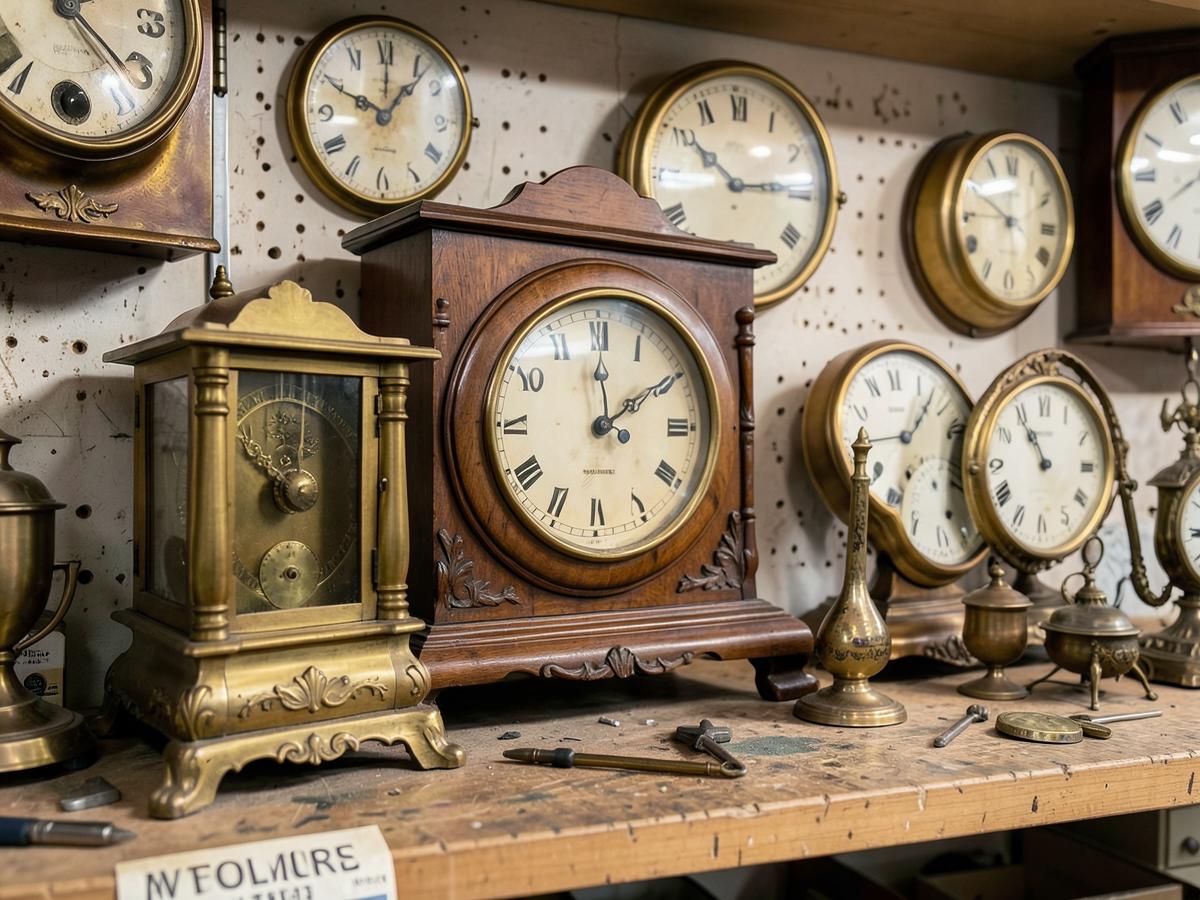
Clocks and situations this suits
Vienna regulators and weight-driven wall clocks
American shelf clocks by Seth Thomas, Ansonia and Ingraham
French marble, slate and gilt mantel clocks
Estate and inherited clocks with sentimental value
Serving Boulder, Louisville, Lafayette, Longmont, Superior, Erie, Broomfield, Westminster, Arvada and Denver. Bench work at our Spruce Street shop; in-home visits throughout the service area. See all areas served →
Questions about antique clock restoration
Will restoration lower the value of my antique?
Sensitive restoration generally protects value; over-restoration destroys it. That is why we avoid refinishing original surfaces and never replace a part that can be repaired.
Can you restore a clock that has been in storage for decades?
Almost always. Dried oil, surface rust and dust are normal after long storage and do not mean the clock is beyond help.
Do you provide written estimates?
Yes. After examination you receive a written estimate covering movement, dial and case work as separate line items so you can choose the scope.